
GEO Targeting Strategies for Local SEO Success in 2026

By Frederick Clifton, TREJA POWER
In the evolving landscape of digital marketing, local SEO has become an essential pillar for businesses striving to thrive in competitive environments. As we approach 2026, understanding geo-targeting strategies will be critical for enhancing local search visibility. This article delves into various tactics that can bolster local SEO performance, ensuring businesses are positioned effectively to attract nearby customers. Readers will learn about the fundamentals of local and geo-based SEO, the importance of specific keyword strategies, citation building, structured data usage, and the impact of emerging technologies and voice search optimization. By addressing these areas, local businesses can refine their marketing approaches to respond to the unique needs of their geographic markets.
What Are the Fundamentals of Local SEO and Geo Based SEO Tactics?
Local SEO refers to optimizing a website in order to rank better for local search queries. It focuses on attracting customers who are searching for services or products within a specific geographic area. Effective geo-based SEO tactics involve various aspects, including local keyword optimization, optimizing Google My Business profiles, and ensuring consistent NAP (Name, Address, Phone Number) information across all platforms. These strategies work together to enhance visibility in local search results and connect businesses to their community more effectively.
How Do Location Specific Keyword Strategies Boost Local SEO?
Utilizing location-specific keywords enhances local SEO performance by ensuring that content is tailored to the audience's specific geographic area. Such keywords typically include city names or regional identifiers that signal search engines to present relevant results to users. For instance, a plumbing service in San Francisco might target phrases like "San Francisco plumbing services" or "emergency plumbing in San Francisco."
Incorporating these location-based keywords throughout a website's content—including titles, headers, and meta descriptions—can significantly enhance relevance for local searches. This specificity not only improves ranking but draws more qualified traffic, thereby increasing the likelihood of conversions. Location-specific lingo and nuances can engage local audiences effectively.
For businesses looking to improve their keyword strategies, employing tools like Google Keyword Planner and Ahrefs can help identify popular local search terms. Keyword mapping onto specific pages of the website also creates a clear content structure that supports effective indexing.
Why Is Citation Building Essential for Geo Targeting Success?
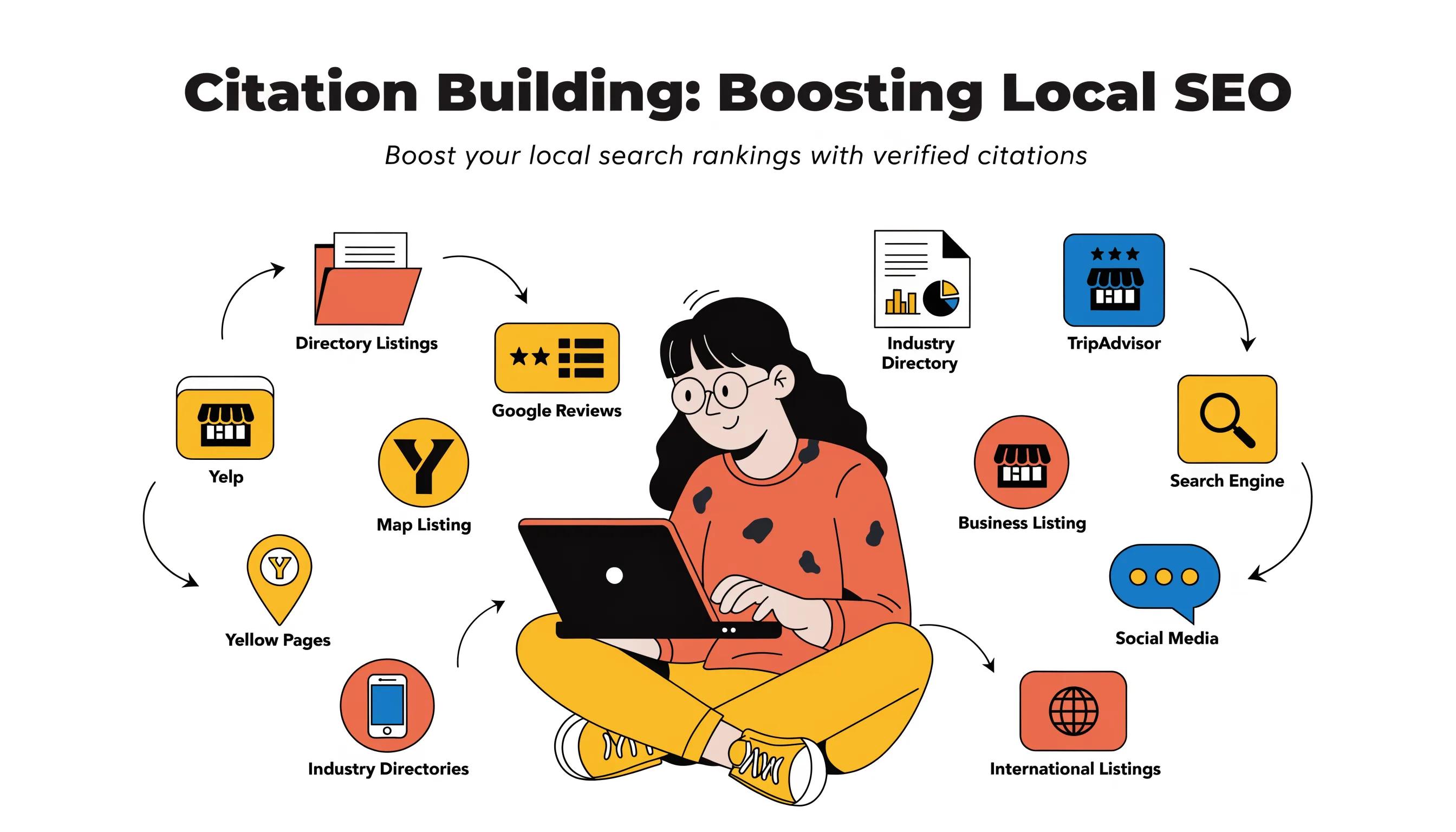
Citation building is pivotal to successful geo-targeting as it establishes a business's credibility and authority in its locality. Citations generally occur when a business's name, address, and phone number are mentioned online, ideally on reputable directories and websites. Accurate citations help search engines validate a business's information, improving its rank in local search results.
| Citation Type | Platform Example | Benefit |
|---|---|---|
| Local Directories | Yelp, Yellow Pages | Increased visibility in searches |
| Industry-Specific Sites | Angie's List, HomeAdvisor | Enhanced authority in niche markets |
| General Platforms | Facebook, Google My Business | Improved local SEO via integrated maps |
This comparison illustrates the significant impact that various types of citations can have on local SEO efforts. A robust citation profile signals to search engines that a business is trustworthy and engaged, which can result in improved rankings, especially in competitive local markets.
How Can Structured Data Markup Enhance LocalBusiness Geo Targeting?
Structured data markup is a code that you add to your website to help search engines better understand the information contained on that page. For local businesses, implementing structured data can significantly enhance their visibility in search results. It allows businesses to provide detailed information about their services, locations, and hours of operation, all of which are crucial for local SEO.
Integrating schema markup specifically for local businesses can yield rich snippets in search results, giving potential customers more insights at a glance. Utilizing the LocalBusiness schema type is especially beneficial because it provides important context to search engines about the business's location and offerings.
What Schema.org Types Should You Use for Local SEO in 2026?
The Schema.org vocabulary provides a structured format that can significantly assist in enhancing local SEO. Key schema types that should be implemented include:
- LocalBusiness: Essential for any local business, providing basic information like name, address, and contact details.
- Product: Includes details about specific items or services offered, allowing for better indexing of product offerings.
- Review: This structure helps display customer feedback prominently, assisting with credibility and trust.
Implementing these schema types can not only improve search visibility but also enhance user experience by showing relevant content in a structured format.
How Does JSON-LD Structured Data Improve Local Search Rankings?
JSON-LD (JavaScript Object Notation for Linked Data) is a method for encoding linked data using JavaScript. This format is endorsed by Google for structured data because it’s easy to implement and doesn't interfere with the content of the page. Using JSON-LD allows businesses to effectively communicate their structured data to search engines without complicating the HTML of their webpages.
Businesses that adopt JSON-LD for their local SEO strategies often see improved search rankings and enhanced visibility because search engines find it easier to crawl and interpret their relevant information. It can lead to displaying rich snippets, which further attracts clicks and potential customers.
What Are Best Practices for Google My Business Optimization in Geo Based SEO?
An optimized Google My Business (GMB) profile is crucial for local SEO success. Best practices for GMB include:
- Complete Profile: Ensure that every segment of the profile is filled out, including photos, business hours, and services offered.
- Regular Updates: Frequently update information, including details about services, promotions, or changes to hours.
- Respond to Reviews: Engage with customer feedback, both positive and negative, showing that the business values interaction.
These steps not only support better rankings but also enhance customer engagement, leading to higher conversion rates from local searches.
How to Set Up and Maintain an Effective Google My Business Profile?
Creating and maintaining an effective GMB profile involves several key steps:
- Claim Your Listing: Start by claiming your business on GMB and verifying your ownership.
- Complete the Information: Fill in all relevant fields with accurate and up-to-date information.
- Add High-Quality Photos: Showcase your business and products through compelling images to attract potential customers.
Regularly reviewing and updating this information keeps the profile fresh and relevant, ensuring that customers receive accurate data.
How Do Reviews and Ratings Impact Local SEO Authority?
Reviews and ratings are critical components of local SEO authority. They serve as social proof, positively influencing the decision-making process of potential customers. Search engines also consider customer feedback when determining local rankings.
Research has shown that businesses with a higher volume of positive reviews tend to rank better in local search results. Positive reviews enhance trustworthiness, leading to increased click-through rates and conversions.
How Are AI and Machine Learning Influencing Geo Targeting and Hyperlocal SEO?
AI and machine learning technologies are transforming geo-targeting and hyperlocal SEO practices. These advancements allow for more personalized search results based on user behavior, location, and preferences.
For instance, AI algorithms can predict user intent better than ever, delivering more accurate search results. This means businesses need to adapt their SEO strategies to be aligned with how AI interprets and ranks local content.
What Emerging AI Trends Affect Local Search Intent and Ranking?
Several emerging AI trends are expected to shape local search in significant ways:
- Semantic Search: Search engines are increasingly focusing on the meaning behind queries, rather than just the keywords used.
- Voice Search Optimization: With the rise of voice-activated devices, businesses need to optimize their content for spoken queries.
- Predictive Analytics: Businesses can leverage AI to analyze data trends and tailor their offerings to meet evolving customer needs.
These trends emphasize the necessity for businesses to remain agile and informed about changing technologies in order to sustain their local SEO efforts.
How to Leverage Machine Learning for Hyperlocal Marketing Success?
Machine learning presents numerous opportunities for hyperlocal marketing strategies. By analyzing patterns and consumer behavior, businesses can create targeted marketing campaigns that resonate with local audiences.
For instance, predictive analytics can help businesses anticipate customer needs based on past behavior, allowing for more tailored promotions and offerings. Utilizing machine learning algorithms can also optimize ad targeting, leading to better return on ad spend.
What Voice Search and Mobile Geo Targeting Strategies Should Marketers Use?
Voice search has fundamentally changed how users conduct searches, impacting local SEO strategies. Marketers should adopt several key voice search strategies:
- Conversational Keywords: Use natural language and question-based phrases that people typically use when speaking.
- Local Optimization: Ensure that all location data is clear and concise for voice-query processing.
- Mobile-Focused Content: Create content that is easily accessible on mobile devices, as a significant volume of voice searches occur via smartphones.
How Does Voice Search Change Local Keyword Targeting in 2026?
As voice search becomes more ubiquitous, businesses need to adapt their keyword targeting to include more conversational phrases. This shift requires crafting content that answers the questions users are likely to ask verbally. Additionally, ensuring that information is optimized for local intent will be vital for visibility in voice search results.
What Mobile SEO Techniques Enhance Location-Based User Experience?

Optimizing mobile SEO is crucial for enhancing location-based user experiences. Techniques that businesses should implement include:
- Responsive Design: Ensure that websites are mobile-friendly and adapt seamlessly to different screen sizes.
- Fast Load Times: Optimize page loading speeds to reduce bounce rates and improve user satisfaction.
- User-Friendly Navigation: Design clear and intuitive navigation paths to facilitate easier browsing.
These mobile-focused techniques not only improve user experiences but also contribute positively to local SEO rankings.
What Case Studies Demonstrate the ROI of Geo Targeting Strategies in 2025-2026?
Case studies provide practical examples that demonstrate the effectiveness of geo-targeting strategies, illustrating how investments in local SEO yield measurable returns.
- Retail Success Story: A regional clothing retailer that optimized its local SEO efforts, including GMB management and targeted keyword implementations, saw a 40% increase in foot traffic and a 30% increase in online sales.
- Service Industry Case: A plumbing service utilized local keyword strategies and citation building, resulting in a 50% increase in inquiries and service bookings within six months.
- Restaurant Growth: A dining establishment invested in structured data markup, generating over 200 new online reservations in its first month following implementation.
These examples underscore the tangible benefits of effective geo-targeting strategies for local businesses.
Which Success Stories Highlight Effective Local SEO Using Location Targeting?
Numerous businesses have successfully leveraged location targeting to achieve significant local SEO results. These success stories highlight various industries and approaches, showcasing how geo-targeting can be a game-changer.
This academic research further emphasizes the importance of local optimization for retailers, particularly in increasing organic traffic and achieving advantageous placements in local search results.
Local Optimization for Retailer Business: Increase Organic Traffic
The Purpose of the presented research is to substantiate the importance of the local optimization of the retailer’s business for search engines to increase organic traffic; to represent insights and give practical recommendations for retailers regarding local optimization of their business in Google as part of an effective marketing strategy; to create the typical valid data micromarking (by the example of the Ukrainian retailer), which will contribute to an advantageous placement in the Local Pack in comparison with competitors, and increase organic traffic and conversion.
Business optimization in the digital age: Insights and recommendations, A Natorina, 2020
As businesses adapt their strategies to the unique elements of their target markets, they often find increased visibility and engagement that directly correlates with their investment in local SEO.
How Do KPIs Validate the Impact of Geo Targeting on Local Business Growth?
Measuring the impact of geo-targeting requires a structured approach to tracking key performance indicators (KPIs). Important KPIs include:
- Search Ranking Improvements: Monitoring changes in local search positions.
- Increased Foot Traffic: Evaluating data from footfall metrics or in-store visits.
- Conversion Rates: Analyzing how well local SEO traffic converts into sales or leads.
These metrics provide businesses with a comprehensive view of how well their geo-targeting strategies are performing, enabling adjustments to optimize future efforts.
To take your campaigns further, explore our insights on AI-driven geo marketing solutions and learn how businesses are optimizing location-based search results.
By embracing effective GEO targeting strategies for local SEO, businesses can enhance their online visibility, draw in more localized customers, and ultimately achieve greater success in their markets.
To expand your local reach, discover how to implement AI-driven GEO marketing solutions and start optimizing location-based search results today.